Hailstorms can cause more than a few visible marks on your roof. When hail hits asphalt shingles, the impact can loosen protective granules, crack the shingle surface, or damage areas that may not be easy to see from the ground. Even when a roof does not appear severely damaged, small issues can become larger problems if they are left untreated.
For homeowners, understanding how hail affects asphalt shingles can help you identify potential damage and decide when a professional roof inspection is needed. JC Master Inc. provides roof inspections, repairs, and storm damage roofing services for residential and commercial properties in New York.
What Happens When Hail Hits Asphalt Shingles?
Asphalt shingles are designed to protect your home from rain, wind, and other outdoor conditions. During a hailstorm, however, repeated impacts can affect the shingle surface.
Depending on the size and force of the hail, the impact may:
- Remove protective granules
- Create dents or impact marks
- Crack or weaken shingles
- Damage shingle edges
- Expose parts of the underlying material
- Loosen shingles or roofing components
The severity of the damage depends on several factors, including hail size, wind speed, roof age, shingle condition, and the angle of impact.
1. Hail Can Remove Protective Granules
The small granules covering asphalt shingles play an important role in protecting the roofing material. They help shield the shingle from sunlight and normal weather exposure.
Strong hail impacts can knock granules loose. If enough granules are lost, the affected area may become more vulnerable to sunlight, rain, and general weather exposure.
You may notice loose granules around downspouts or in gutters after a severe storm. However, finding granules alone does not always confirm hail damage, so the roof should be properly inspected.
2. Hail Can Create Cracks and Impact Damage
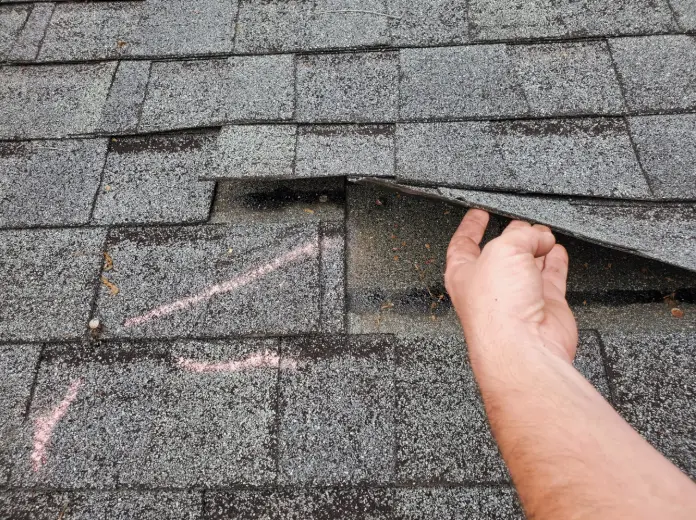
Larger or forceful hailstones can damage the surface of asphalt shingles. Some damage may appear as dents, cracks, or small areas where the shingle has been weakened.
These problems are not always easy to spot from the ground. A professional inspection can help identify areas that may have been affected.
3. Hail Damage Can Lead to Water Problems
Damaged shingles may not immediately cause a roof leak. However, cracks, exposed areas, or displaced roofing materials can make it easier for water to reach areas that should remain protected.
Once water gets beneath damaged shingles, it can contribute to problems involving the roof deck, insulation, ceilings, or interior walls.
This is one reason it is important not to ignore suspected storm damage simply because you do not see a leak inside your home.
4. Older Shingles May Be More Vulnerable
The condition and age of your roof can affect how it responds to a hailstorm. Older asphalt shingles may already have some wear from sunlight, temperature changes, rain, and wind.
When a storm occurs, an aging roof may be more likely to show signs of damage than a newer roof in good condition.
This does not mean every older roof needs replacement after a hailstorm. A professional inspection can help determine whether the damage requires repair or whether broader replacement should be considered.
5. Hail Can Damage More Than the Shingles
A hailstorm can affect several parts of a roofing system, not just the visible shingles.
During an inspection, a roofing professional may evaluate areas such as:
- Shingles
- Flashing
- Roof edges
- Vents
- Gutters
- Downspouts
- Skylights
- Other exposed roofing components
Checking the complete roof system can help identify damage that might otherwise be overlooked.
What Are the Signs of Hail Damage on Asphalt Shingles?
Some signs can be visible after a storm, while others require a closer inspection.
Look for:
- Missing or damaged shingles
- Dark or unusual impact marks
- Areas with missing granules
- Cracked shingles
- Loose roofing materials
- Damaged flashing
- Dents in gutters or downspouts
- Water stains inside the home
- New leaks following a storm
It is important to remember that not every mark on a shingle is caused by hail. A roofing professional can help determine whether the observed condition is storm-related or the result of normal aging and other causes.
Should You Inspect Your Roof After a Hailstorm?
Yes. A roof inspection after a significant hailstorm can help identify problems before they become more serious.
JC Master Inc. offers roof inspection services for both residential and commercial properties. The company’s inspection process focuses on important roof areas and provides customers with information about the condition of their roofing system.
If you suspect hail damage, it is better to have the roof evaluated rather than assuming everything is fine because there is no visible leak.
Can Hail Damage Be Repaired?
In some cases, yes. The appropriate solution depends on the extent and location of the damage.
If only a limited number of shingles or roofing components are affected, a professional may recommend repairs. If the roof has widespread damage, is already near the end of its useful life, or has other significant problems, replacement may be considered.
JC Master Inc. provides both roof repair and roof replacement services, including storm damage roof replacement.
When Does Hail Damage Require Roof Replacement?
Hail damage does not automatically mean you need a completely new roof.
Replacement may be considered when damage is extensive or when the existing roof is already significantly worn. A professional roofing contractor can assess the condition of the shingles and other roofing components before recommending the next step.
Getting an inspection first helps you avoid making a decision based only on what can be seen from the ground.
What Should You Do After a Hailstorm?
If your area experiences a major hailstorm, start by checking for obvious signs of damage around your property. Look at gutters, downspouts, siding, windows, and other exterior components for impact marks.
Then consider scheduling a professional roof inspection.
If you notice an active leak, water stains, or damaged roofing materials, address the problem promptly. Delaying repairs can allow a relatively small roofing issue to become more expensive.
Can Hail Damage Affect Your Roof Insurance Claim?
Storm damage may be covered by a homeowner’s insurance policy depending on the policy terms, type of damage, exclusions, and other conditions.
If you believe your roof has suffered hail damage, document what you can safely observe and review your insurance policy. Avoid climbing onto the roof yourself, as damaged or wet roofing surfaces can be dangerous.
JC Master Inc. also provides roof insurance assistance and storm damage roofing services in New York.
How Can You Protect Your Roof From Future Storm Damage?
You cannot prevent hailstorms, but regular roof maintenance and inspections can help you keep your roofing system in better condition.
Consider:
- Scheduling periodic roof inspections
- Replacing damaged shingles promptly
- Keeping gutters and downspouts clear
- Checking the roof after major storms
- Addressing small leaks quickly
- Maintaining flashing and other roof components
- Keeping records of roofing repairs and maintenance
A well-maintained roof is better prepared to handle normal weather exposure.
Protect Your Roof With JC Master Inc.
Hail can damage asphalt shingles in ways that are not always obvious from the ground. Lost granules, cracks, impact marks, and weakened shingles can eventually contribute to moisture problems if they are not addressed.
JC Master Inc. provides roof inspections, storm damage roofing, roof repairs, and roof replacement for residential and commercial properties throughout New York. The company works with different roofing systems, including shingle, metal, and flat roofs.
If your roof has recently experienced a hailstorm, a professional inspection can help determine its condition and whether repairs or replacement are appropriate.
Frequently Asked Questions
Can small hail damage asphalt shingles?
Yes. Even smaller hail can potentially affect shingles depending on the storm conditions, roof age, shingle condition, and impact angle. A professional inspection is the best way to determine whether damage occurred.
What does hail damage look like on asphalt shingles?
Possible signs include missing granules, impact marks, cracks, damaged edges, and weakened areas. Some damage may be difficult to identify without a closer inspection.
Does hail damage always cause a roof leak?
No. Hail damage may not cause an immediate leak. However, damaged shingles can become more vulnerable to water intrusion over time.
Should I replace my roof after hail damage?
Not necessarily. The appropriate solution depends on the extent of the damage and the condition of the existing roof. A professional inspection can help determine whether repair or replacement makes more sense.
How soon should I inspect my roof after a hailstorm?
It is a good idea to arrange an inspection after a significant hailstorm, particularly if you notice visible damage, missing shingles, leaks, or other unusual changes. Early evaluation can help identify problems before they become more serious.